Measles at Home: What You Really Need to Know
By Joanne Reiniger, PA-C
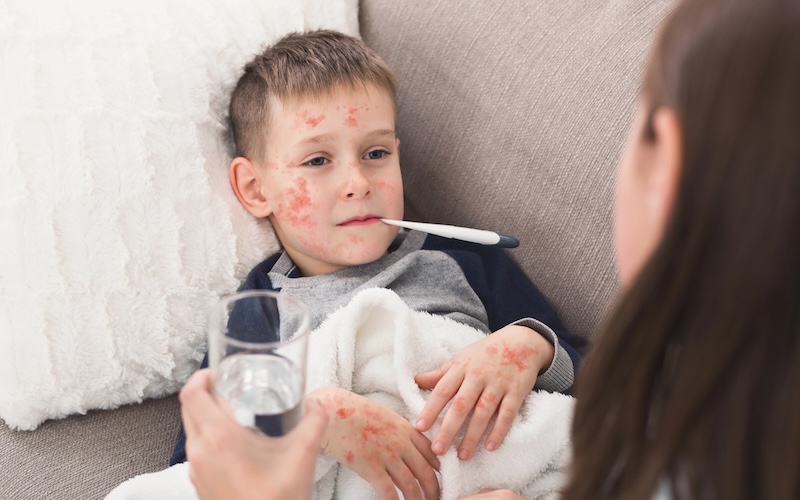
I’ve actually seen measles. Not just in a textbook — on real, miserable people sitting in front of me.
Years ago, when I was working urgent care in the Midwest, I served a large Amish and Mennonite population. One season, community members started coming in looking terrible. I’m talking bright red conjunctivitis, throats that looked like a cross between the worst strep I’d ever seen and mono, high fevers, and a rash that I — to my shame — didn’t immediately recognize.
I’d only ever seen a couple of photos of measles in my training. It wasn’t on my radar. It wasn’t on anyone’s radar. Eventually the community members figured out what it was before I did, and they mostly stopped coming to the doctor. They took care of their own. And the “outbreak” went unnoticed.
One moment I’ll never forget: I was examining an Amish man — I’ll call him Sylvan — and I recommended some soothing throat drops. His wife, who was very health-conscious and naturally minded, looked at me in horror and said, “You are telling us to put sugar on that throat? It will burn!”
Well, yes — sugar can actually be soothing to an inflamed throat. (Honey would be even better, and she probably had some at home.) But I loved her instinct to question it, even though I felt helpless to offer any real solution.
Here’s the thing about that community: nobody ended up in the hospital. Not one person. And that wasn’t luck. It was because the plain people are remarkably good at caring for the sick at home. They know how to nourish, hydrate, and support a body through illness. They don’t panic, and they don’t neglect. They just… care for each other well.
That experience has stayed with me, and it’s exactly why I’m writing this now. Because measles is back, and most people have no idea how to handle measles at home if it shows up in their family.
Measles in 2026: Where We Are
The United States has already recorded over 730 confirmed measles cases in 2026, and we’re barely into February. In all of 2025, there were over 2,200 cases — the most since 1991. Three people died. The country may lose its measles elimination status, a designation it has held since 2000.
The outbreaks are real. The spread is real. And the assumption that this only affects unvaccinated people? That’s not the whole picture.
What Most People Don’t Know About Measles Immunity
Here’s something that might surprise you: vaccine-induced immunity to measles can fade over time.
A 2024 study published in The Lancet Public Health found that breakthrough infections are increasingly common in adults over 15 who received both recommended doses of the measles vaccine. The New England Journal of Medicine confirms that secondary vaccine failure — where immunity wanes years or decades after vaccination — accounts for a real portion of measles cases in well-vaccinated countries. A study from Mongolia found that among young adults aged 15–25 who had been vaccinated, secondary vaccine failure accounted for 61% of cases in their outbreak.
This isn’t fringe science. These are major medical journals confirming what anyone who goes out in public needs to understand: you can be fully vaccinated and still be susceptible, especially if it’s been many years since your last dose.
So here’s the question I think really matters: Whether you’re vaccinated or not, what do you actually do if you or someone in your family gets sick?
The Danger Most People Don’t See Coming
As a PA, one of the things that concerns me most about people managing illness at home isn’t the fever. It isn’t even the rash. It’s what happens with hydration — specifically, what happens when someone reaches for a glass of plain water and thinks they’re doing the right thing.
Millions of Americans take diuretics for blood pressure. Medications like hydrochlorothiazide (HCTZ), furosemide (Lasix), and chlorthalidone are among the most commonly prescribed drugs in the country. Most people taking them have no idea that these medications are already pulling sodium, potassium, magnesium, and other critical electrolytes out of their body every single day. Under normal circumstances, the body compensates. But “normal circumstances” goes out the window when someone gets seriously ill.
Now picture this: someone on a daily diuretic develops a high fever. They’re sweating. They develop diarrhea — which is common with measles and many other illnesses. Their body is losing water AND electrolytes through every possible route. The diuretic is still doing its job on top of all that.
And then, with the best of intentions, they rehydrate with plain water. Just water.
The water floods the system, but it doesn’t replace what’s been lost. Instead, it dilutes the electrolytes that remain. Sodium drops. Potassium drops. The result can be hyponatremia and other dangerous electrolyte imbalances — which can cause confusion, muscle weakness, nausea, breathing problems, cardiac irregularities, and in severe cases, seizures. And here’s what makes it a vicious cycle: the nausea caused by dropping electrolytes makes the patient less likely to eat, which means they’re not getting any electrolytes from food either. Everything spirals. This is exactly why electrolyte-rich fluids become so important — when someone can’t eat, those fluids may be the only thing keeping their levels from bottoming out.
This is critically important, and it applies to far more than measles. Any time someone has a significant fever, diarrhea, or vomiting — whether from measles, the flu, a stomach bug, or anything else — they need electrolytes, not just water.
Who Needs to Pay Extra Attention?
- Anyone taking a diuretic (ask your pharmacist if you’re not sure whether your blood pressure medication is one)
- Anyone experiencing prolonged diarrhea or vomiting
- Elderly adults, who often have lower electrolyte reserves to begin with
- Small children, who can become dehydrated dangerously fast
- Anyone with a high fever lasting more than a day or two
What Does Good Hydration Look Like?

The key is balance. You don’t want plain water only, but you also don’t want to overdo the electrolytes. Alternate between them.
And here’s one more reason proper hydration matters: well-hydrated airways function better. Measles pneumonia is one of the most serious complications of the illness, and dry, dehydrated mucous membranes can’t do their job of trapping and clearing pathogens. Every sip matters.
Oral rehydration solution — you can buy Pedialyte or Drip Drop, or make your own:
- 1 quart (4 cups) clean water
- 6 teaspoons sugar (I know, I know — but it serves a real purpose here. It helps your body absorb the sodium. Even Sylvan’s wife might approve in this case.)
- ½ teaspoon salt
Mix well. Sip throughout the day. Make it fresh daily.
Coconut water provides natural electrolytes. Diluted juice with a pinch of salt works in a pinch. Herbal tea with honey and a pinch of salt is soothing and provides some electrolyte support.
Alternate these with plain water throughout the day. Just don’t rely on water alone.
Bone broth is honestly your best friend here. It contains sodium, potassium, minerals, and actual nutrition. Sip it throughout the day. If you do nothing else, do this. If you’ve been reading my emails for any length of time, you know I’m going to say bone broth. I always say bone broth. Because it always applies.
Food as Medicine: Cod Liver Oil and Whole Food Vitamin C
Now let me tell you about the approach that I believe in — and that has solid, time-tested evidence behind it.
When measles hit a Mennonite community in West Texas during the 2025 outbreak, Dr. Ben Edwards treated over 200 children using two simple things: cod liver oil and whole food vitamin C. He wrote about his experience in Wise Traditions, the journal of the Weston A. Price Foundation. What he observed confirmed what the research has shown for decades — and it’s the same thing those Amish and Mennonite families I cared for in the Midwest already knew instinctively.
Vitamin A and Your Airways
Vitamin A is absolutely essential for the lining of your airways to function properly. Multiple studies have shown that vitamin A can reduce measles mortality — one study found a reduction of up to 82%. The World Health Organization has long recommended vitamin A for children with measles.
But here’s the thing: just taking a synthetic vitamin A supplement can easily lead to overdosing. Isolated, synthetic vitamins don’t behave the same way in the body as vitamins that come packaged in real food.
Cod Liver Oil Is a Food, Not a Supplement
This is important, so let me say it again: cod liver oil is a food.
Vikings ate the livers of cod fish on long sea voyages. Northern European fishing communities consumed cod liver oil for generations. They weren’t taking supplements. They were eating food that happened to be incredibly nutrient-dense. The Weston A. Price Foundation has documented how cultures around the world — from the South Seas to Scandinavia — relied on nutrient-dense animal fats, including fish liver oils, as foundational foods for robust health.
Because cod liver oil is a whole food, it contains not just vitamin A, but also vitamin D, omega-3 fatty acids, and other components that work together synergistically with the nutrients in other foods we eat. This is why it’s much harder to overdose on cod liver oil than on a synthetic vitamin A capsule — your body knows what to do with food.
Clinical trials conducted before 1940 found that cod liver oil reduced measles mortality by more than half and reduced industrial absenteeism by up to two-thirds. Modern research continues to support the role of vitamin A in measles recovery.
Dr. Edwards gave 1–2 teaspoons of good quality cod liver oil before each meal to older children who were ill, and smaller amounts to younger children. This was done for several days — not long-term. He observed that symptoms typically improved within one day of starting cod liver oil and vitamin C. All of the children he treated recovered without adverse consequences.
He also noted something that won’t surprise anyone who follows the Weston Price philosophy: the most severe cases were in children with comparatively poor nutrition — the ones snacking on goldfish crackers and eating other processed foods. The children from families who ate well fared much better.
Whole Food Vitamin C
Dr. Edwards used whole food vitamin C — approximately 500 mg every hour until bowel tolerance was reached (meaning, back off if you get loose stools). I personally prefer a slightly lower dose of around 200–250 mg every couple of hours.
Remember what I’ve shared before about vitamin C: if you take between 30 and 180 mg, your body absorbs 70–90% and it stays active for up to 1–5 weeks. But increase the dose to over 1 gram at once and absorption drops below 50% with a half-life of less than 30 minutes. You end up flushing most of it down the toilet. More frequent, moderate doses are almost always better than mega-doses.
Important: These are general educational guidelines, not individual medical advice. Please work with your healthcare provider, especially for children, pregnant women, or anyone on medications. Increased cod liver oil dosing is for short-term acute illness only — not an everyday regimen. And pregnant women should NOT increase their cod liver oil dose, as high-dose vitamin A can cause birth defects.
Build Your Reserves Now — With Food Growing All Around You
You don’t have to wait until someone is sick to start building the reserves that help your body handle whatever comes along. Anyone who goes out in public has contact with people who might be carrying something — whether those people are vaccinated or not. That’s just the reality of living in community.
The good news? You can build resilience with simple, time-tested foods. And some of them are literally growing in your yard.
Rose Hip Jam (No Cooking Required)
Rose hips — the fruit of the rose plant that appears after the flowers fade — contain significantly more vitamin C than oranges. You can find them growing wild or on ornamental roses, or you can purchase dried, cut rose hips.
Here’s my incredibly simple recipe:
You need:
- About ½ cup dried, cut rose hips
- Apple juice or cider (enough to cover, plus more — they soak it up)
- Honey (optional, but I think it needs a little)
Place the rose hips in a jar. Pour apple juice over them to cover. Add honey if desired. Stir well and let sit at least 2 hours, up to overnight. Keep checking and stirring — add more juice as needed until you like the consistency. Store in the fridge.
Use it like jam, or just eat a spoonful. Caution: Rose hips are mildly laxative, so don’t try to eat the whole jar.
Pine Needle Tea
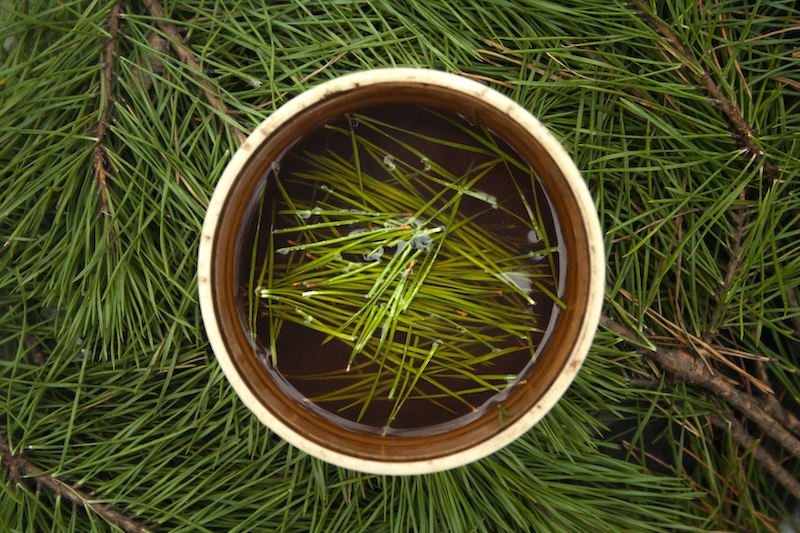
Eastern White Pine needles are a vitamin C powerhouse — containing up to 5 times the vitamin C of lemons by weight. Pine is also a warming and drying herb that is useful for fighting off viruses, and the needles are packed with minerals and are anti-inflammatory.
Steep fresh pine needles in hot (not boiling) water for a simple, mineral-rich tea. Be sure to properly identify your trees — Eastern White Pine and Spruce are excellent choices. It blends beautifully with elderberry-based teas too.
Add enough honey and it becomes a syrup. The little twigs can even be added to hot water as part of an herbal steam for sinus congestion.
Note: Some sources indicate pine may have abortifacient properties. Use extreme caution or avoid internal use if you are pregnant.
Fermented Vegetables
Sauerkraut made from fresh cabbage is an excellent source of vitamin C — fermentation actually increases the vitamin C content. It also provides beneficial probiotics that support the gut health underlying your entire immune system. If you’ve been following along with my work for a while, you know that gut health is the foundation of everything.
Daily Cod Liver Oil for Everyday Health
For everyday health building — not during illness — one teaspoon of good quality cod liver oil before a meal can do wonders for overall health. This isn’t about fighting disease. It’s about building the kind of robust, resilient body that handles challenges well when they come.
Your Free Measles Home Care Guide
I’ve created a detailed Measles Home Care Guide that walks you through exactly what to do at each phase — from exposure through recovery. It covers:
- Immune support with specific, practical guidance for each stage of illness
- Hydration strategies and why plain water alone can be dangerous
- Herbal support options — from a simple chamomile and elderflower tea that anyone can make, to Rosemary Gladstar’s traditional Gypsy Cold Care formula for those experienced with herbs
- Fever management and respiratory care to help prevent pneumonia
- A monitoring checklist so you know what to watch for
- When to call your provider and when to go to the ER
- Special instructions for pregnant women
- A complete supply list so you can prepare now, before you need it
Whether you’re a parent, a caregiver, or just someone who believes in being prepared, this guide gives you practical, food-first tools you can use with confidence.
The Bottom Line
Measles is circulating in the United States at levels we haven’t seen in over 30 years. Immunity — whether from vaccines or other sources — isn’t always permanent. And when illness hits, knowing how to manage measles at home makes all the difference. Those Amish and Mennonite families I cared for years ago knew this. The ones Dr. Edwards treated in Texas knew it too. Nobody was hospitalized because they were nourished, hydrated with the right fluids, and cared for by people who paid attention.
Build your nutritional reserves now with real, whole foods. Know how to hydrate properly during illness — especially if you or someone in your family takes a diuretic. Have a plan before you need one.
Our ancestors understood something we’re just rediscovering: food is medicine, and medicine should be food whenever possible.
Have you ever cared for someone through measles — or another illness — using food and herbs at home? I’d love to hear what worked for your family.
Blessings,
Joanne
Joanne Reiniger is a PA-C, the owner of Christian Healthcare Solutions in Dover Foxcroft, Maine, and the creator of A Pleasing Life — a space for Christian women seeking natural vitality to the glory of God.
References:
- Robert, A. et al. “Long-term waning of vaccine-induced immunity to measles in England: a mathematical modelling study.” The Lancet Public Health. 2024.
- “Measles 2025.” New England Journal of Medicine. 2025.
- “Breakthrough Measles among Vaccinated Adults Born during the Post-Soviet Transition Period in Mongolia.” Vaccines (Basel). 2024;12:695.
- Centers for Disease Control and Prevention. “Measles Cases and Outbreaks.” Updated February 6, 2026. https://www.cdc.gov/measles/data-research/index.html
- Masterjohn, C. “Did Cod Liver Oil Contribute to the Historical Decline in Measles Mortality and Mortality from Other Infectious Diseases?” Weston A. Price Foundation. 2015.
- Edwards, B. “Treating Measles with Cod Liver Oil.” Wise Traditions, Weston A. Price Foundation. 2025.
- “Vitamin A-mazing.” Weston A. Price Foundation. 2024.
- Pharmacokinetics of Vitamin C. PLoS Medicine. 2005. https://journals.plos.org/plosmedicine/article?id=10.1371/journal.pmed.0020307
- “The Grass-Fed Milk Story: Understanding the Impact of Pasture Feeding on the Composition and Quality of Bovine Milk.” Foods. 2019;8(8):350.