Silky Homemade Eggnog:
Three Homemade Eggnog Recipes: Choose Your Adventure
Homemade eggnog is one of winter’s quiet gifts—a wholesome, warming drink that nourishes as much as it comforts. There are three different recipes at the end of this post. Use or print the one that works best for you. 😘
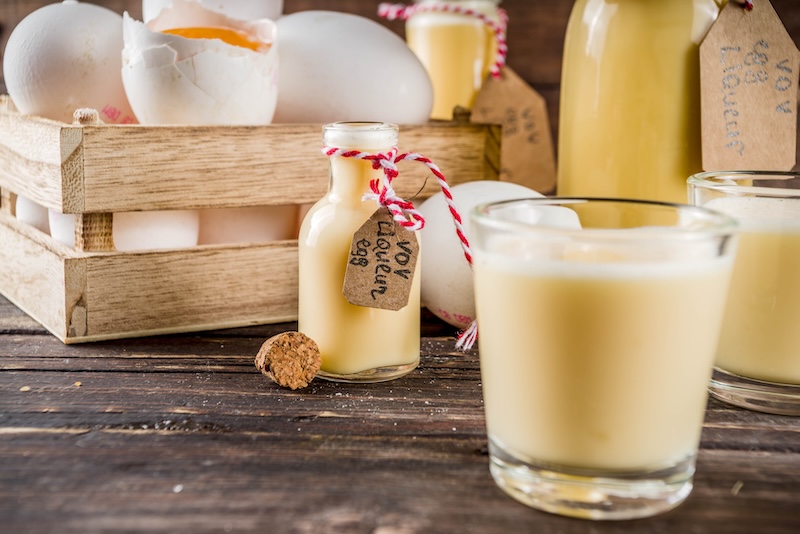
This homemade eggnog recipe uses the cooked custard method, gently heating pastured egg yolks with cream and milk to create a texture that can only be described as liquid velvet. It’s silkier and more homogeneous than raw eggnog, with a body that coats the glass and feels luxurious on the tongue.
I sweetened mine modestly with maple syrup and raw honey, and spiced it generously with freshly grated nutmeg and cinnamon. The result? I enjoyed a cup while it was still warm and found myself quite drowsy—ready to curl up with a warm blanket and a book. You see, real nutmeg in meaningful quantities has mild sedative properties—something store-bought eggnog, with its whisper of artificial flavoring, will never offer you. The sedative effect is much stronger when served warm, so save the warm version for evenings.
That said, this eggnog is lovely both warm and chilled. I discovered it makes a beautiful creamer for morning coffee—rich and spiced and completely indulgent. No drowsiness when served in my coffee, just a luxurious start to the day.
Why Egg Yolks Deserve a Place in Your Diet
Pastured egg yolks are nutritional powerhouses, and eggnog is a delicious way to enjoy them. Here’s what those golden yolks bring to your cup:
Choline — Essential for liver function, brain health, and nervous system support. Most Americans are deficient, and egg yolks are one of the richest dietary sources available.
Fat-Soluble Vitamins — Vitamins A, D, E, and K2, all in their natural, bioavailable forms. K2 in particular is difficult to obtain from modern diets and is crucial for proper calcium and vitamin D metabolism.
Sulfur-Containing Amino Acids — Egg yolks provide cysteine and methionine, which support your body’s production of glutathione—your master antioxidant. This is the same pathway that NAC supplementation targets, but in whole-food form.
Lutein and Zeaxanthin — Carotenoids that support eye health, found in the deep orange color of pastured yolks.
Phospholipids — Including phosphatidylcholine, which supports cell membranes, cognitive function, and mitochondrial energy production.
When you source eggs from hens on pasture—eating bugs, grass, and soaking up sunshine—the nutrient density increases dramatically. The yolks are deeper in color and richer in fat-soluble vitamins. If you raise your own hens or have access to a local farm, your eggnog will be all the more nourishing for it.
Quick Kitchen Tips For Homemade Eggnog
New to separating eggs? Here’s a quick how-to:
How to Separate Egg Yolks From the Whites
Mixing the Eggs and Sweetener
Beating the eggs with honey and maple syrup. I used a mixer. Feel free to use a whisk if you prefer.
Heating the Milk to 160 Degrees
The milk will start to thicken as it gets close to 160 degrees. It will look like this. My thermometer was giving me a hard time in this video, but you’ll get the idea.
How To Temper Eggs
I’m sorry about the music making it hard to hear instructions. Hopefully, I can get a better video up soon. It’s important to slowly warm the eggs (temper) so you don’t end up with chunks of scrambled egg in your eggnog. I add very small amounts of hot milk to the eggs to avoid needing a lot of straining out of clumps at the end.
Heating the Milk and Egg Mixture to 170 Degrees Can Take a While.
A Note on Richness and Portions
This is a rich drink—gloriously so. An 8-ounce serving contains substantial fat and protein, which is part of what makes it so satisfying and helps buffer any blood sugar response from the natural sweeteners.
That said, listen to your body. A smaller 4–6 ounce portion may be perfect, especially as an after-dinner treat. If you find that rich, fatty foods consistently give you trouble—bloating, belching, discomfort, or that heavy feeling that lingers—it may be worth considering your gallbladder health. Sluggish bile flow or gallbladder dysfunction can make fat digestion difficult. This isn’t cause for alarm, just an invitation to pay attention and perhaps investigate further with a practitioner you trust.
Digestive bitters taken 10–15 minutes before a rich meal can also help. They stimulate bile production and support fat digestion—something our grandmothers knew instinctively. Check out this post for more on digestive bitters.
The Boozy Option
For those evenings when you’d like something a little more festive, eggnog welcomes a splash of spirits beautifully.
Per 8-ounce serving, add:
- 1/2 oz bourbon (I used Jim Beam)
- 1/2 oz amaretto
The bourbon brings warmth, vanilla, and oak. The amaretto adds subtle almond complexity. Together they create a deeply satisfying evening drink. Stir gently and top with freshly grated nutmeg.
I keep my eggnog “virgin” in the refrigerator and rarely add spirits by the glass—that way I have flexibility depending on the evening. Why “rarely”? Because alcohol easily impairs our detox pathways.
Three Versions: Choose Your Adventure
I’ve written this recipe three ways so you can print the version that works for your dietary needs. The first one is a classic dairy-based eggnog. the second replaces the dairy with coconut milk and the third option is a cashew based version.
Classic Silky Homemade Eggnog
Equipment
- 1 Heavy-bottomed pot or saucepan Large enough to hold 8 – 10 quarts
- 1 Large mixing bowl
- 1 Whisk or a hand mixer To beat the egg yolks and sugar
- 1 Instant-read thermometer or other cooking thermometer
- 1 Fine-mesh sieve optional, but nice for straining out fine particles
- 1 Grater for nutmeg Any fine grater will work
Ingredients
- 10 Egg yolks
- 3 TBS Maple Syrup
- 2 TBS Raw honey
- 5 Cups Whole Milk
- 2 Cups Heavy Cream
- 1 tsp Freshly grated nutmeg, plus more for serving
- 1 tsp Cinnamon
- 1/4 tsp Allspice
- 1 pinch Ground cloves
- 1 tsp vanilla extract (or 1 vanilla bean, split)
- 1/4 tsp Good Quality Salt
Instructions
- Whisk the egg yolks, maple syrup, and honey together in a large bowl until smooth and slightly lightened in color. Set aside
- Combine the milk, cream, nutmeg, cinnamon, allspice, cloves, and salt in a heavy-bottomed pot. If using a vanilla bean, add it here. Heat over medium-low, stirring occasionally, until the mixture is steaming and reaches about 160°F. Do not allow it to boil.
- Temper the egg yolks by slowly ladling about 1/2 cup of the warm dairy mixture into the yolk bowl, whisking constantly. Add more warm dairy mixture to the egg mixture, whisking continuously. This gradual process prevents the eggs from scrambling. Add a total of 2 to 3 cups of dairy to the egg. The egg bowl should begin to feel warm to the touch.
- Pour the tempered yolk mixture back into the pot with the remaining dairy. Cook over medium-low heat, stirring constantly with a wooden spoon or silicone spatula, until the mixture reaches 170°F and coats the back of a spoon. This takes about 5–8 minutes. Do not let it boil.
- Remove from heat and pour immediately through a fine-mesh sieve into a clean container.
- Stir in the vanilla extract if using.
- Allow to cool slightly, then cover and refrigerate until thoroughly chilled, at least 4 hours. Overnight is ideal—the flavors meld beautifully.
- Serve cold with freshly grated nutmeg on top. This eggnog is also delightful when served warm for a relaxing evening drink.
- For a boozy version, add 1/2 oz bourbon and 1/2 oz amaretto per 8-ounce serving.
Notes
Nutrition (per 8-oz serving, plain)
- Calories: 410
- Fat: 33g
- Saturated Fat: 19g
- Cholesterol: 230mg
- Carbohydrates: 21g
- Sugar: 20g
- Protein: 10g
Dairy-Free Coconut Eggnog
Equipment
- 1 Heavy-bottomed pot or saucepan large enough to hold 8 – 10 quarts
- 1 Large mixing bowl
- 1 Whisk or hand mixer
- 1 Instant-read thermometer or other cooking thermometer
- 1 Fine-mesh sieve
- 1 Grater for the nutmeg
Ingredients
- 10 egg yolks pastured
- 5 cups full-fat canned coconut milk shaken well
- 2 cups coconut cream
- ¼ cup maple syrup
- 2 tablespoons raw honey
- 1 teaspoon freshly grated nutmeg plus more for serving
- 1 teaspoon cinnamon
- ¼ teaspoon allspice
- 1 pinch cloves
- 1 teaspoon vanilla extract or 1 vanilla bean, split
- 1 pinch sea salt
Instructions
- Whisk the egg yolks, maple syrup, and honey together in a large bowl until smooth and slightly lightened in color.
- Combine the coconut milk, coconut cream, nutmeg, cinnamon, allspice, cloves, and salt in a heavy-bottomed pot. If using a vanilla bean, add it here. Heat over medium-low, stirring occasionally, until the mixture is steaming and reaches about 160°F. Do not allow it to boil.
- Temper the egg yolks by slowly ladling about 1/2 cup of the warm coconut mixture into the yolk bowl, whisking constantly. Add another cup, whisking continuously. This gradual process prevents the eggs from scrambling.
- Pour the tempered yolk mixture back into the pot with the remaining coconut milk. Cook over medium-low heat, stirring constantly, until the mixture reaches 170°F and coats the back of a spoon. This takes about 5–8 minutes. Do not let it boil.
- Remove from heat and pour immediately through a fine-mesh sieve into a clean container. Stir in the vanilla extract if using.
- Allow to cool slightly, then cover and refrigerate until thoroughly chilled, at least 4 hours. Overnight is ideal—the flavors meld beautifully.
- Serve cold with freshly grated nutmeg on top. For a boozy version, add 1/2 oz bourbon and 1/2 oz amaretto per 8-ounce serving.
Notes
Nutrition (per 8-oz serving, plain)
- Calories: 450
- Fat: 38g
- Saturated Fat: 30g
- Cholesterol: 185mg
- Carbohydrates: 22g
- Sugar: 18g
- Protein: 7g
Dairy-Free Cashew Eggnog
Equipment
- 1 Heavy-bottomed pot or saucepan to hold at least 8 – 10 quarts
- 1 Large mixing bowl
- 1 Whisk or hand mixer to beat the eggs
- 1 Instant-read thermometer or other cooking thermometer
- 1 Fine-mesh sieve
- 1 Grater for the nutmeg
Ingredients
- 10 egg yolks pastured
- 5 cups cashew milk see notes
- 2 cups cashew cream see notes
- ¼ cup maple syrup
- 2 tablespoons raw honey
- 1 teaspoon freshly grated nutmeg plus more for serving
- 1 teaspoon cinnamon
- ¼ teaspoon allspice
- 1 pinch cloves
- 1 teaspoon vanilla extract or 1 vanilla bean, split
- 1 pinch sea salt
Instructions
- Whisk the egg yolks, maple syrup, and honey together in a large bowl until smooth and slightly lightened in color.
- Combine the cashew milk, cashew cream, nutmeg, cinnamon, allspice, cloves, and salt in a heavy-bottomed pot. If using a vanilla bean, add it here. Heat over medium-low, stirring occasionally, until the mixture is steaming and reaches about 160°F. Do not allow it to boil.
- Temper the egg yolks by slowly ladling about 1 cup of the warm cashew mixture into the yolk bowl, whisking constantly. Add another cup, whisking continuously. This gradual process prevents the eggs from scrambling.
- Pour the tempered yolk mixture back into the pot with the remaining cashew milk. Cook over medium-low heat, stirring constantly with a wooden spoon or silicone spatula, until the mixture reaches 170°F and coats the back of a spoon. This takes about 5–8 minutes. Do not let it boil.
- Remove from heat and pour immediately through a fine-mesh sieve into a clean container. Stir in the vanilla extract if using.
- Allow to cool slightly, then cover and refrigerate until thoroughly chilled, at least 4 hours. Overnight is ideal—the flavors meld beautifully.
Notes
Nutrition (per 8-oz serving, plain)
- Calories: 380
- Fat: 28g
- Saturated Fat: 5g
- Cholesterol: 185mg
- Carbohydrates: 24g
- Sugar: 19g
- Protein: 9g